Laser

Laser

← Back to services

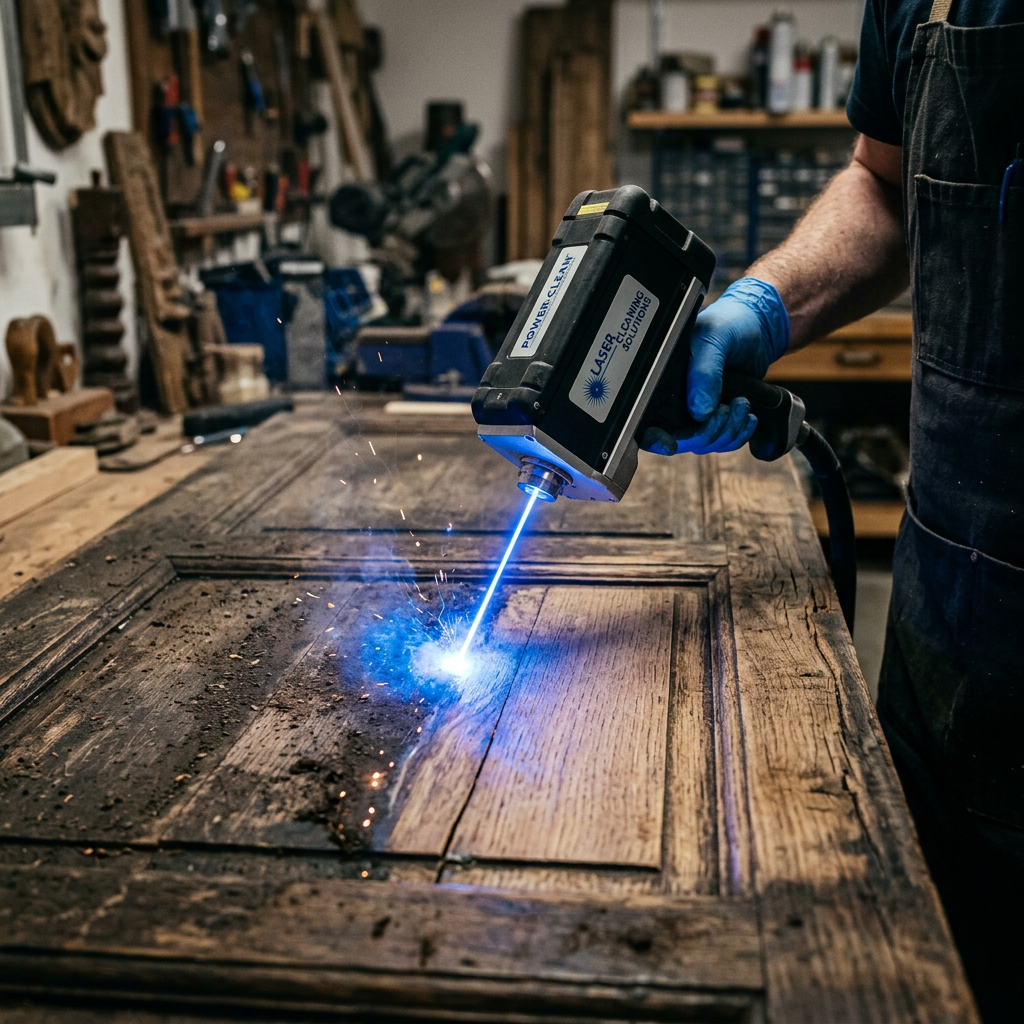
When you are responsible for a historic object, a sacred interior, an architectural surface or a family heirloom, you need a method that allows the surface to be cleaned carefully and under control. Laser cleaning can help remove selected dirt, soot, deposits and secondary layers from wood, stone, ceramic and metal without physical contact between the tool and the surface.

As a museum, parish, conservator, heritage property manager or private owner, you can first see the result on a small agreed area. A free technological test helps assess the substrate reaction, select laser parameters and make an informed decision before a larger scope of work begins.

You do not have to decide blindly. Before work starts, the material, condition, type of deposits and conservation objective are assessed. This gives you a solution tailored to your object, with the option of mobile work, documentation and an effect intended to reveal authentic character rather than make the object look artificially new.

The investment in this technology is part of a project co-financed by the European Funds for Silesia 2021-2027. More information is available on the EU Project page.

When is laser cleaning worth considering?

when your object has a delicate texture, carved detail, profiling or an uneven surface

when you are concerned about using water, chemicals, sandblasting or intensive abrasion

when you want to see a technological test and the real result before commissioning a larger scope of work

when the element should be cleaned on site, without removal from a church, museum, palace, townhouse or facade

What can be cleaned with laser technology?

Historic wood

If you are responsible for furniture, altars, sacred sculptures, chests, structural beams or joinery, you can verify the possibility of removing dirt, soot and selected secondary coatings without aggressive mechanical intervention.

Sandstone and natural stone

For portals, sculptures, tombstones, architectural details and facades, you receive a test matched to the stone type, degree of soiling and sensitivity of the specific surface.

Brick and ceramic

Historic facades, tiles and decorative ceramic elements require careful assessment. Before a broader scope of work, you can see how the substrate responds to laser cleaning.

Plasters, stucco and details

With delicate plasters, stucco and fine details, limiting risk is essential. A technological test helps determine whether laser cleaning is the right method for your object.

Stone and ceramic floors

If a floor in a historic building is affected by waxes, grease or dark deposits, you receive an assessment of cleaning options that considers use intensity and further protection.

Historic metal elements

For forged details, fittings, grilles and decorative elements, the alloy, corrosion and expected result need to be assessed. This makes it easier to decide whether laser cleaning is a good choice.

Cooperation step by step

1

Object and substrate assessment

At the start, you can send photos or arrange a site visit. You receive an initial assessment of the material, condition, type of deposits, access to the surface and conservation requirements.

2

Free technological test

On a small agreed area, you see the real cleaning result. The investor, object custodian and conservator can calmly assess the outcome before deciding on the main work.

3

Laser parameter selection

Parameters are adjusted to your object: material, soiling and conservation objective. Control over pulse energy, working speed and surface response makes the process predictable.

4

Execution and documentation

You can commission mobile work on site or deliver a smaller element to the workshop. Upon request, you receive photographic documentation and a description of the parameters used and the process.

Book a free technological test

See how your object reacts to laser cleaning, understand the possible result and receive a sound basis for an informed decision before the actual restoration work.

Book a free technological test

Selected projects

Laser cleaning test on a surface
Controlled removal of deposits with laser technology
Precise laser work on a selected area

Frequently asked questions

Is laser cleaning safe for historic objects?

It depends on the material, condition of the object, type of soiling and correct parameter selection. That is why, before a decision is made, you receive a substrate assessment and a technological test on an agreed area.

Do heritage conservators accept this method?

Laser cleaning is used in conservation work, but final acceptance depends on the specific object, conservation programme and the decision of the relevant people or institutions. A technological test and documentation give you a reliable basis for discussion with the conservator.

Can the service be performed on site?

Yes. If the object cannot or should not be dismantled, work can be carried out on site: in a church, museum, historic building, on a facade, portal or architectural element. Smaller items can be delivered to the workshop.

Does the process create mess or dust?

Laser cleaning does not require abrasive media or water, so it usually reduces inconvenience compared with mechanical methods. During planning, you receive information on how the work area and filtering extraction will be arranged.

How much does laser cleaning cost?

The price depends on the material, surface area, detail geometry, level of soiling, access conditions and expected documentation scope. After a free technological test, it is easier to receive a realistic estimate of time and cost.